




How Many Bags of Mulch in a Yard? Simple Calculator Guide [2026]
Converting mulch yards to bags doesn’t need to be complex. Many gardeners and homeowners still find this calculation confusing. The math is simple – one cubic yard of mulch equals 27 cubic feet. Garden centers usually sell mulch in 2-cubic-foot bags. You’ll need about 13.5 bags to make up one yard. Big box stores often sell smaller 1.5-cubic-foot bags during sales. This means you’ll need more bags to cover the same area. A yard of mulch matches one scoop from a standard skid loader bucket, which is how bulk mulch is typically measured.Yards-to-Bags Calculator (Fast Conversion)
Already know how many cubic yards you need? Use this calculator to convert yards into bag counts for common bag sizes.Yards → Bags Converter
2 cu.ft bags:
1.5 cu.ft bags:
3 cu.ft bags:
Recommended (+10% yards):
Tip: Round up to whole bags. Consider ordering ~10% extra.
How much mulch is in a yard?
Understanding mulch measurements helps you plan any landscaping project better. Here’s a simple breakdown of what makes up a yard of mulch and how that relates to bags you’ll find at garden centers.Understanding cubic feet in a yard of mulch
A cubic yard fills up a cube that measures 3 feet on each side. Landscaping suppliers use this standard measurement of “a yard of mulch” which equals 27 cubic feet. This same unit is used when ordering bulk mulch delivery.
These measurements help you figure out the right amount of mulch needed for your garden beds. To cite an instance, see a flower bed that’s 10 feet by 10 feet – if you want your mulch 3 inches deep, you’ll need just under 1 cubic yard.

How many bags are in a yard of mulch?
Since a cubic yard contains 27 cubic feet, your bag count depends on the size you buy:
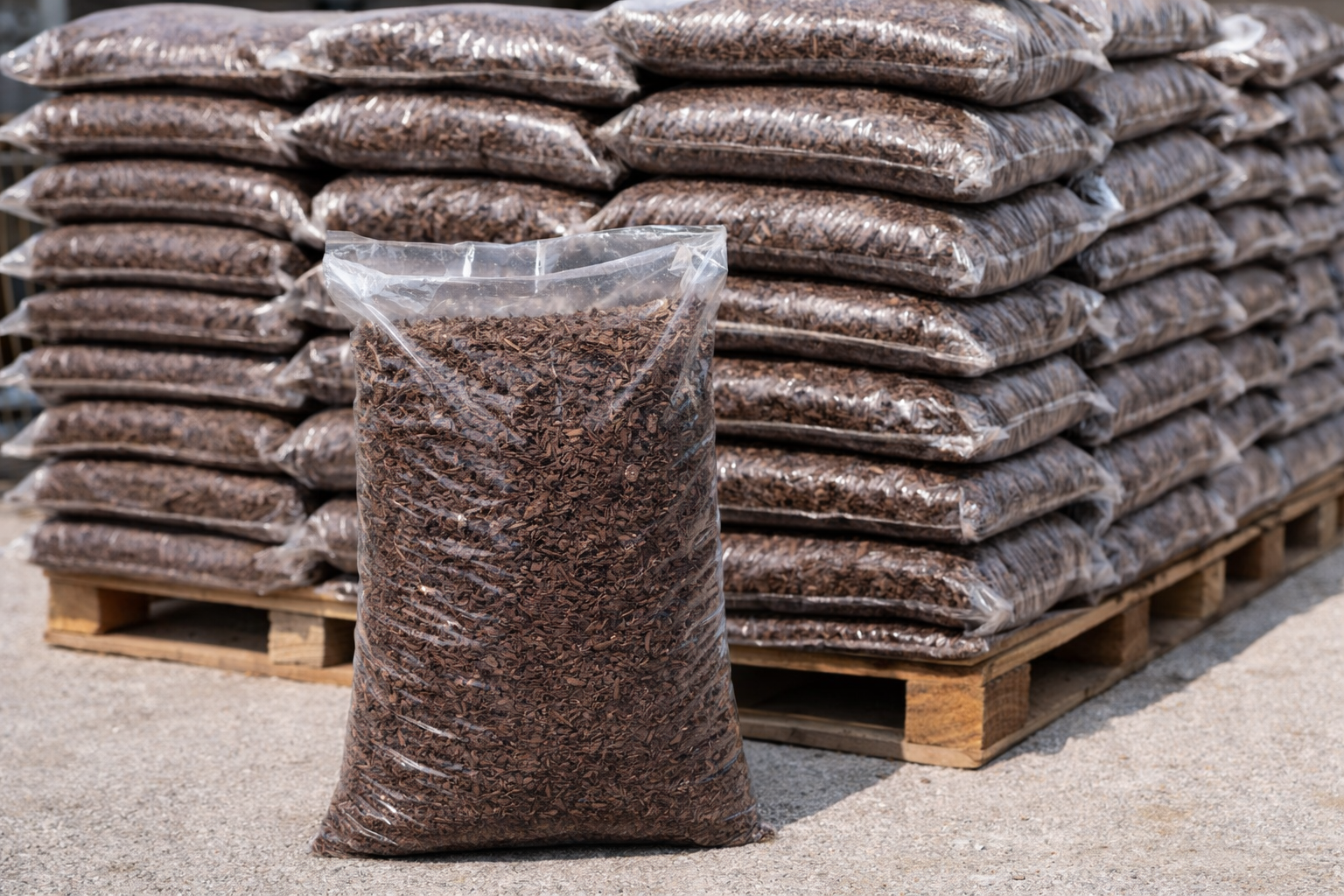
- For 2 cubic foot bags: You’ll need 13.5 bags (usually rounded up to 14 bags)
- For 1.5 cubic foot bags: You’ll need 18 bags per cubic yard
- For 3 cubic foot bags: You’ll need 9 bags per yard
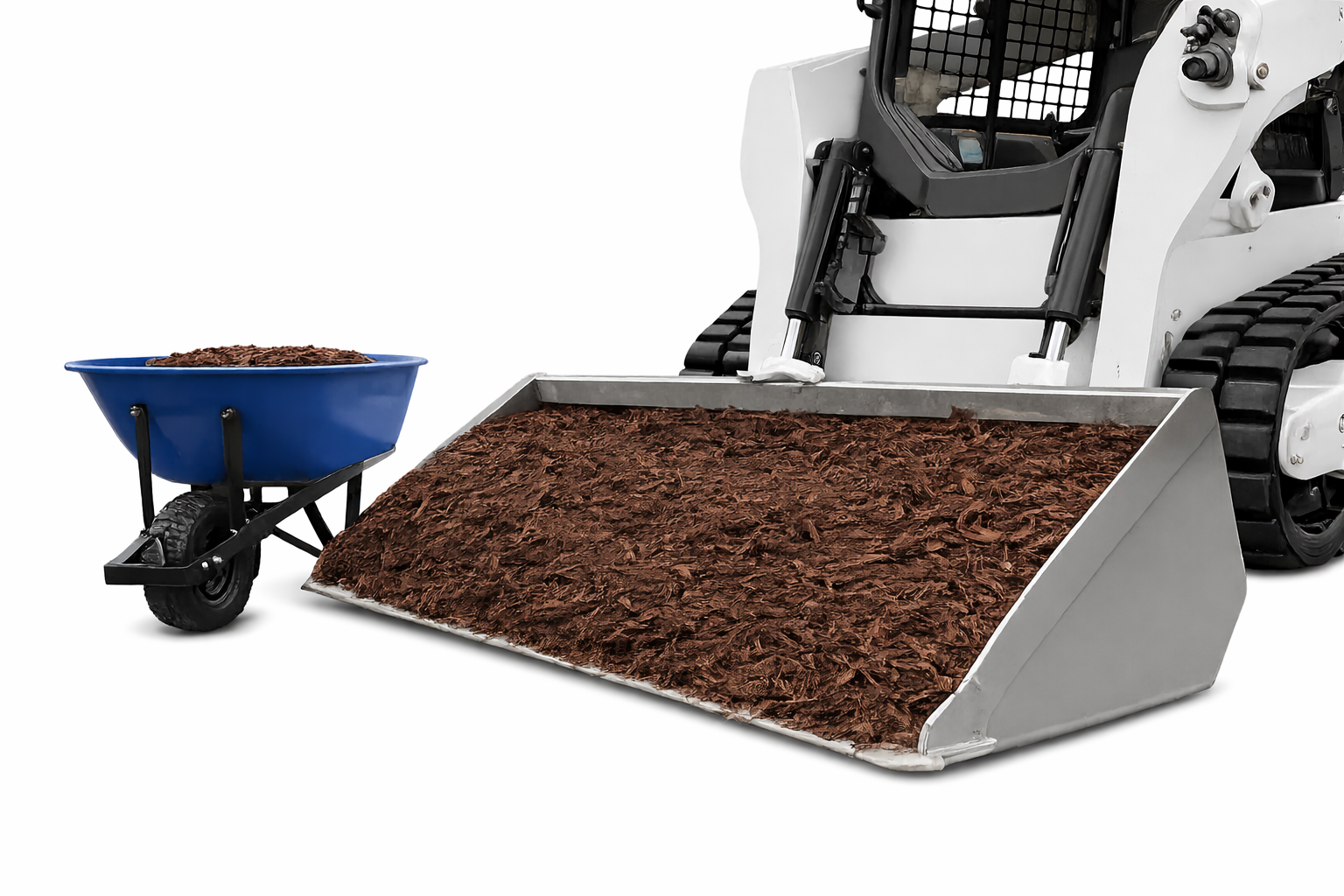
1 yard = 1 scoop on a skid steer loader
Bulk mulch delivery comes with its own measurements. One yard of mulch equals one scoop from a standard skid steer loader bucket. Most skid steer mulch buckets hold about 1 cubic yard (0.76 m³).
A cubic yard of mulch weighs between 400-800 pounds, making it lighter than other landscaping materials. Your standard pickup truck can handle 1 to 1.5 yards of mulch in one trip.
These measurements are vital to compare costs between bulk and bagged mulch effectively. Bagged mulch might be convenient, but bulk mulch gives you better value and quality. Companies like Pine Straw King produce fresh mulch daily, which keeps colors vibrant and dyes intact compared to material sitting in plastic packaging.
Bag size comparison: 2 cu.ft vs 1.5 cu.ft
A trip to the store for mulch reveals two main bag sizes on the shelves. The size difference might look small, but it makes a big impact on the number of bags needed for your project.How many 2 cu.ft bags in a yard?
Standard mulch bags contain 2 cubic feet of material. One cubic yard equals 27 cubic feet, so you’ll need 13.5 bags of the 2 cubic foot size to make up a complete yard of mulch. Let’s look at a typical landscaping project that needs 4 cubic yards of mulch. You would need 54 bags at the 2 cubic foot size to cover the area. This math becomes vital when you compare pricing against bulk mulch installation options. New gardeners should know that one yard of mulch equals about 14 bags at the 2 cubic foot size. We round up from 13.5 for buying purposes.How many 1.5 cu.ft bags in a yard?
The smaller 1.5 cubic foot bags need different math. You’ll need exactly 18 bags to equal one cubic yard. This is a big deal as it means you need 33% more bags compared to the 2 cubic foot size. A project needing 3 cubic yards would require 54 bags of the 1.5 cubic foot size.Why big box stores often sell 1.5 cu.ft bags
Home Depot, Lowe’s, and Walmart sell lots of 1.5 cubic foot bags, even though they’re less efficient for buyers. The marketing strategy behind this makes sense for the stores. Smaller bags let stores show attractive “per bag” prices while increasing your total spend. A common deal might be 5 bags for $10 (at $2 per bag). But with 1.5 cubic foot bags, you need 18 bags for one yard, bringing your cost to about $36 total. Bagged mulch costs more per cubic foot than bulk mulch. Some retailers sell Scott’s mulch in 1.5 cubic foot bags for $3.33 each. One yard would cost nearly $60 using these bags. Local suppliers like Pine Straw King often provide higher-quality bulk mulch. Fresh bulk material retains color better because dyes haven’t degraded from months of plastic storage.How to figure out how much mulch I need
Calculating the right amount of mulch for your landscaping project requires precision and planning. Proper estimation prevents wasteful spending and ensures complete coverage for your garden beds. Follow these steps to determine exactly what you need.Step 1: Measure your area (length x width)
Begin by measuring the length and width of each area requiring mulch. For rectangular spaces, multiply length by width to find the square footage. For circular areas, measure the radius and use the formula: Area = πr².Step 2: Choose your mulch depth
- For decorative purposes: 2 inches is sufficient
- For moisture retention: 3-4 inches works best
- For weed suppression: 3-4 inches is recommended
Quick formula: Square footage ÷ 162 = yards needed
For rapid calculations, use this simple formula: divide your total square footage by 162 to determine cubic yards needed for a 3-inch application.- One cubic yard = 27 cubic feet
- 13.5 bags of 2 cu.ft mulch = 1 yard
- 18 bags of 1.5 cu.ft mulch = 1 yard
Step 3: Use our mulch calculator below
Mulch Calculator
Cubic yards:
2 cu.ft bags:
1.5 cu.ft bags:
3 cu.ft bags:
Recommended (+10% yards):
Bulk vs bagged mulch: cost and quality
Cost per cubic foot: bulk vs bagged
A cubic yard contains 27 cubic feet of mulch. This equals 13.5 bags of 2 cu.ft mulch or 18 bags of 1.5 cu.ft mulch. Bulk mulch typically costs $30-$40 per cubic yard, while bagged mulch costs $39-$65 for the same volume.Why bulk mulch is often better quality
Bulk mulch stays fresher because it is produced and delivered quickly, unlike bagged products that may sit in plastic for months.How Pine Straw King ensures fresh, vibrant mulch
Pine Straw King produces fresh bulk mulch regularly to maintain vibrant colors and optimal moisture content. One yard equals one traditional skid loader scoop, which makes ordering easy.Conclusion
Proper mulch measurements can substantially improve your landscaping projects and help you save money and time. One cubic yard equals 27 cubic feet, and understanding how that translates to bags helps you compare against bulk options. For larger projects, bulk mulch delivery and installation provide better value, fresher material, and fewer trips to the store.Key Takeaways
- One cubic yard equals 27 cubic feet
- Bulk mulch is typically more cost-effective for larger projects
- Fresh bulk mulch maintains color and quality better than bagged products
- Understanding yard-to-bag conversions helps you compare options accurately